In This Guide
Ladakh — the "Land of High Passes" — is unlike any other destination in India. Nestled in the northernmost reaches of the country, this remote region offers dramatic landscapes that seem to belong to another planet: crystal-clear blue lakes flanked by towering Himalayan peaks, ancient monasteries perched on craggy cliffs, vast cold deserts dotted with camel farms, and winding mountain roads that traverse some of the world's highest motorable passes.
Whether you are a seasoned adventure traveler, a photography enthusiast seeking that perfect shot, or simply someone looking to disconnect from the chaos of city life, Ladakh delivers an experience that stays with you long after you have returned home. This comprehensive guide covers everything you need to plan your Ladakh adventure in 2026 — from permits and routes to accommodation and budgets.
Best Time to Visit Ladakh
Ladakh is a year-round destination, but the tourism season runs primarily from May to September when the roads are open and the weather is favorable. However, each month offers a distinctly different experience.
May to June: The Early Season
This is when Ladakh awakens from its winter slumber. The snow begins to melt, rivers run full with meltwater, and the valley transforms into a carpet of wildflowers. The Srinagar-Leh road typically opens by late April, while the Manali-Leh highway opens by late May or early June. Early season means fewer crowds and lower prices, though some high-altitude passes may still have snow.
July to August: Peak Season
This is the most popular time to visit Ladakh. All roads, including the Manali-Leh highway, are fully operational. The weather is pleasant (daytime temperatures range from 15°C to 25°C), and the entire region is accessible. However, this is also the busiest period, so expect more tourists at popular spots like Pangong Lake and Nubra Valley. Book accommodations well in advance if planning to visit during these months.
September: The Golden Month
Many travel experts consider September the single best month to visit Ladakh. The monsoon has ended, leaving behind crystal-clear skies and golden autumn light that bathes the landscape in warm hues. The summer crowds have thinned out, prices drop by 15-25%, and all major attractions remain fully accessible. The weather remains excellent with daytime temperatures around 15-20°C, though nights can get cold.
October to March: Winter Wonders
As winter sets in, most road routes close due to heavy snowfall at high passes. However, flights to Leh continue year-round, making winter visits possible. The highlight of winter is the legendary Chadar Trek — a frozen river walk along the Zanskar River, one of the world's most extreme trekking experiences. Temperatures can drop to -30°C, so winter Ladakh is strictly for serious adventure enthusiasts.
Quick Season Summary
- Best Overall: September (clear skies, fewer crowds, good weather)
- Peak Season: June-August (all routes open, more tourists)
- Budget-Friendly: May and September-October
- Winter Adventure: January-February (Chadar Trek)
How to Reach Ladakh
There are three main ways to reach Ladakh: by air, by road via Srinagar, or by road via Manali. Each route has its own advantages and considerations.
By Air: The Quickest Way
Flying directly to Leh (Kushok Bakula Rimpochee Airport) is the fastest and most convenient option. The airport is well-connected with daily flights from Delhi, with occasional connections from Mumbai, Srinagar, and Jammu. The flight itself is an adventure — the approach into Leh offers breathtaking views of the Himalayas.
Pros: Saves 2-3 days of travel time, comfortable, no road fatigue
Cons: Sudden altitude gain (11,500 ft) increases risk of altitude sickness, requires at least 2 days acclimatization in Leh before exploring
By Road: Srinagar-Leh Highway
The Srinagar-Leh highway covers approximately 420 km and takes 2 days with an overnight stop in Kargil. This route passes through the historic Zoji La pass, Drass (one of the world's coldest inhabited places), and the scenic Lamayuru region.
Pros: Gradual altitude gain helps with acclimatization, scenic journey through Kashmir and Zanskar regions, slightly easier than the Manali route
Cons: Takes longer, road conditions can be challenging in early season
By Road: Manali-Leh Highway
The legendary Manali-Leh highway is approximately 470 km of spectacular mountain scenery, crossing five high-altitude passes: Rohtang La, Baralacha La, Lachung La, Tanglang La, and the famous Khardung La (the world's highest motorable pass at 5,359 m).
Pros: The ultimate road trip experience, dramatic landscapes, iconic adventure
Cons: Most challenging route, requires experienced drivers or local vehicles, long journey (2-3 days), higher risk of altitude sickness due to rapid altitude gain
Route Comparison
- Flying to Leh: 1.5 hours from Delhi, recommended for those with limited time
- Srinagar-Leh: 2 days, gradual acclimatization, open May-October
- Manali-Leh: 2-3 days, most scenic but challenging, open June-mid-October
Permits & Entry Requirements
Ladakh is a border region adjacent to China and Pakistan, so certain areas require permits to visit. The permit system was updated in recent years, and here's what you need to know for 2026:
For Indian Nationals
As of 2021, Indian nationals no longer require a separate Inner Line Permit (ILP) for most tourist areas. Instead, you need to pay the Ladakh Environmental Defence Fund (EDF) fee, which covers your entry to restricted areas.
- EDF Fee: ₹400 (one-time) + ₹20 per person per day + ₹10 Red Cross fee per day
- Total for 7-day trip: Approximately ₹610 per person
- Where to pay: Online via LAHDC Leh permit portal or at DC Office, Leh
For Foreign Nationals
Foreign nationals still require permits for certain border areas:
- Inner Line Permit (ILP): Required for Nubra Valley, Pangong Tso, Tso Moriri, Dah-Hanu
- Protected Area Permit (PAP): Required for Turtuk, Hanle Dark Sky Reserve, and border villages
- Cost: Approximately ₹100-400 per permit
- How to obtain: Through registered travel agents in Leh or online portal
Important Permit Notes
- Permits are not required for Leh city and the main highway
- Restricted areas include: Nubra Valley, Pangong Lake, Tso Moriri, Turtuk, Hanle
- Carry photocopies of all permits — you will be checked at multiple army checkpoints
- Hanle has a strict daily visitor cap — book permits 3 weeks in advance
Top Places to Visit in Ladakh
Pangong Tso
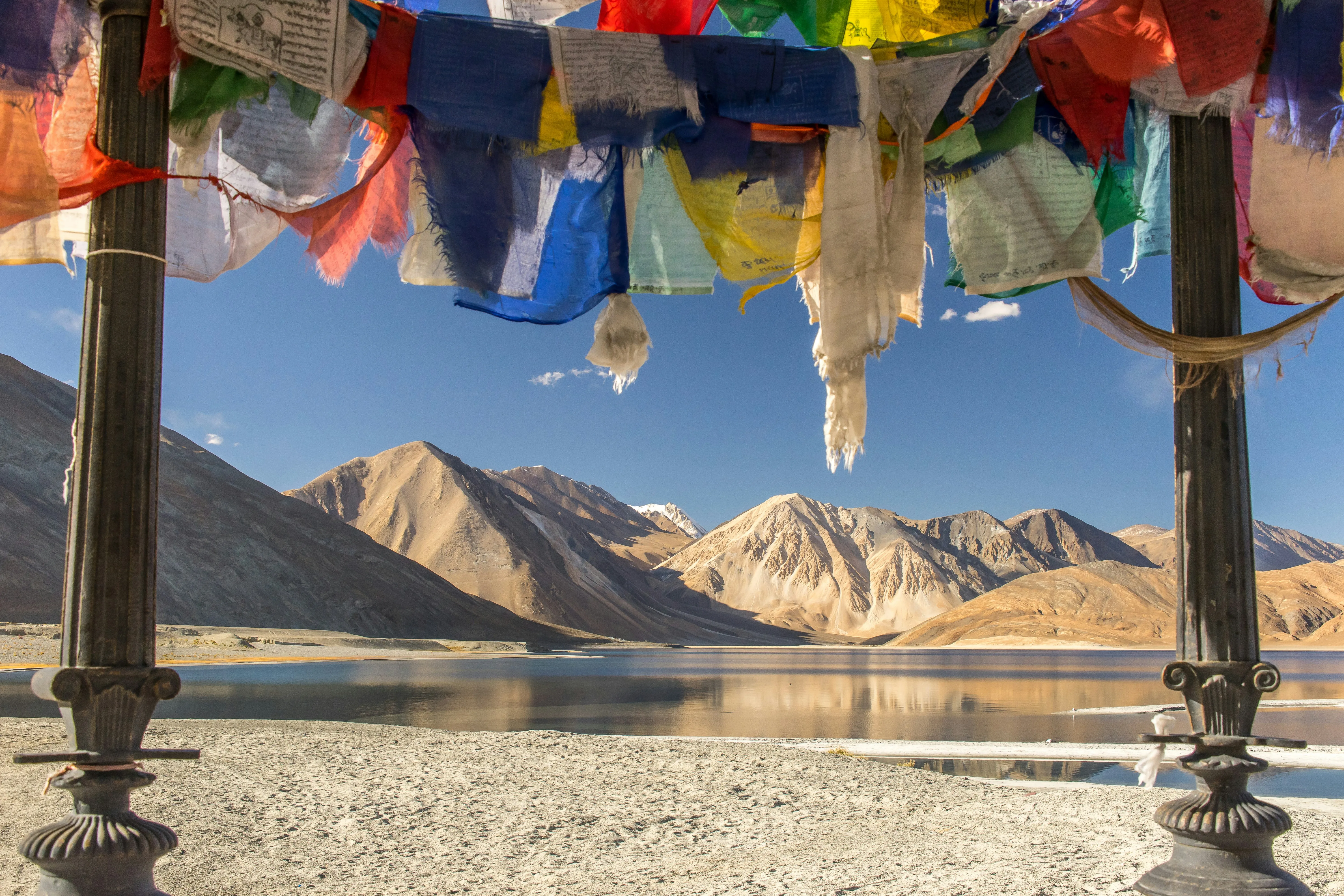
The iconic Pangong Lake is perhaps Ladakh's most famous attraction. This stunning high-altitude lake spans approximately 134 km, with two-thirds of it in Tibet. The lake's striking blue waters, set against the backdrop of rugged mountains, create a picture-perfect scene. The lake lies at 4,350 meters altitude, and visitors can camp nearby or stay in lakeside guesthouses.
Nubra Valley
Often called the "Valley of Flowers," Nubra is a beautiful region north of Leh. Famous for its sand dunes at Hunder, double-humped Bactrian camels, and the historic Diskit Monastery. The drive to Nubra crosses Khardung La, the world's highest motorable pass.
Leh City
The capital of Ladakh is a charming town with a rich history. The Leh Palace, Shanti Stupa, Leh Market, and the numerous monasteries around the city make it a great base for exploring the region. The town offers excellent restaurants, cafes, and gear shops.
Tso Moriri
A pristine high-altitude lake in the remote Changthang region, Tso Moriri is less visited than Pangong but equally stunning. The lake and surrounding wetlands are home to rare migratory birds, including the Black-necked Crane.
Hanle & Dark Sky Reserve
Hanle is emerging as a must-visit destination for astronomy enthusiasts. The Hanle Dark Sky Reserve is one of the world's best locations for stargazing, with minimal light pollution. The village is also home to the ancient Hanle Monastery.
Turtuk
This remote village near the Pakistan border offers a unique cultural experience. Turtuk was part of Pakistan until 1971 and retains a distinct Balti culture. From here, you can visit Thang, the northernmost point of India.
Zanskar Valley
With the opening of new roads (Shinku La tunnel and Nimmu-Padam-Darcha road), Zanskar is now more accessible year-round. This remote valley offers pristine landscapes, ancient monasteries, and some of India's best trekking routes.
Suggested Itineraries
7-Day Quick Circuit (Fly In)
Ideal for those with limited time who want to experience Ladakh's highlights:
- Day 1: Arrive in Leh, rest and acclimatize
- Day 2: Explore Leh city (Leh Palace, Shanti Stupa, local market)
- Day 3: Drive to Nubra Valley via Khardung La (overnight in Diskit or Hunder)
- Day 4: Return to Leh via Nubra
- Day 5: Drive to Pangong Lake (6-7 hours), overnight at lake
- Day 6: Return to Leh, optional visit to Thiksey Monastery
- Day 7: Departure
12-Day Grand Circuit (Road Trip)
The ultimate Ladakh experience, covering most major attractions:
- Days 1-2: Drive from Manali to Leh via Srinagar or Manali highway
- Day 3: Rest in Leh (acclimatization)
- Day 4: Leh to Nubra Valley
- Day 5: Explore Nubra, return towards Leh
- Day 6: Drive to Pangong Lake
- Day 7: Pangong to Tso Moriri
- Day 8: Return to Leh via Tso Moriri
- Day 9: Visit Alchi, Lamayuru monasteries
- Day 10: Kargil and Srify
- Days 11-12: Return journey via remaining route
Where to Stay
Ladakh offers various accommodation options ranging from budget guesthouses to luxury camps:
Leh
The main hub with the widest range of accommodations. Budget guesthouses start around ₹800-1,500/night, while mid-range hotels cost ₹2,000-4,000/night. Luxury hotels and heritage properties go upwards of ₹8,000/night.
Nubra Valley
Options include basic guesthouses in Diskit and Hunder, and luxury camps at dunes. Budget: ₹500-1,000, Luxury camps: ₹3,000-8,000.
Pangong Lake
Mostly basic guesthouses and camping sites. Accommodation is limited, so book well in advance during peak season. Budget: ₹500-1,500, Luxury tents: ₹2,500-5,000.
Tso Moriri
Limited options with basic guesthouses. Advance booking is essential as options are scarce.
Accommodation Tips
- Book at least 2-3 months in advance for peak season (June-August)
- Many places in remote areas have limited heating — pack accordingly
- Most guesthouses offer meals (half-board) — confirm when booking
- Luxury glamping options are now available at Pangong and Nubra
Costs & Budget
Ladakh can be tailored to various budgets. Here is a breakdown of daily costs:
Budget Traveler (₹2,000-3,000/day)
- Shared taxis or local buses
- Budget guesthouse (₹800-1,500/night)
- Local dhabas for meals (₹150-300 per meal)
- Self-planned sightseeing
Mid-Range Traveler (₹4,000-6,000/day)
- Private taxi for sightseeing (shared with group)
- Mid-range hotels (₹2,000-4,000/night)
- Restaurant meals
- Guided excursions
Luxury Traveler (₹8,000+/day)
- Private vehicle with driver
- Luxury camps and boutique hotels
- All-inclusive packages
Essential Travel Tips
Acclimatization
Ladakh's high altitude (Leh is at 3,524m) means altitude sickness is a real concern. Spend at least 2 days in Leh upon arrival before heading to higher areas. Avoid strenuous activity on the first day, drink plenty of water, and avoid alcohol.
What to Pack
- Layers — temperatures vary dramatically between day and night
- Warm jacket (even in summer)
- Sun protection (sunglasses, sunscreen, hat)
- Comfortable walking shoes
- Medications for altitude (consult your doctor about Diamox)
- Power bank (cold drains batteries faster)
- Cash (ATMs are limited outside Leh)
Connectivity
BSNL postpaid has the widest coverage in Ladakh. Jio and Airtel have 4G/5G in Leh city but limited coverage in remote areas. Carry cash for places where digital payments are not accepted.
Health & Safety
- Carry a basic medical kit
- Drink only bottled or filtered water
- Respect army checkpoints — follow all instructions
- Travel insurance is highly recommended
Important Reminders
- Respect local culture and Buddhist traditions
- Do not litter — help preserve this pristine environment
- Stick to designated tourist areas near the border
- Check weather conditions before heading to high passes